


Your Complete PA State Inspection Checklist & Requirements
Your Complete PA State Inspection Checklist & Requirements: Essential Guide for Vehicle Owners
By Larry George, George Automotive
Pennsylvania state inspection rules can feel complex. This guide explains the inspection checklist and requirements in clear terms. Learn what inspectors check, what documents to bring, how to book an appointment, and simple steps to prepare your vehicle. We also cover common reasons for failure and why regular inspections matter for safety and compliance.
Key Takeaways
- All vehicles in Pennsylvania require an annual state inspection to meet safety and emissions standards.
- Vehicle owners must bring valid registration, proof of insurance, and the current inspection sticker to the inspection.
- Scheduling an inspection involves contacting a certified station, providing vehicle details, and booking an appointment.
- Preparing a vehicle by checking lights, tires, and fluid levels improves the chances of passing the inspection.
- Common inspection failures include faulty lights, brake issues, tire problems, and emissions non-compliance.
- If a vehicle fails inspection, owners receive a detailed report with necessary repairs before re-inspection.
- Regular inspections help maintain vehicle safety, ensure legal compliance, and prevent costly repairs.
- George Automotive in Danville offers reliable PA state inspection services and repair support for failed inspections.
PA State Inspection Checklist and Guide for Vehicle Owners
The PA inspection ensures vehicles on the road are safe and meet emissions rules. Use the checklist below to know what inspectors will review. Staying familiar with the items inspected reduces surprises and helps you plan any needed repairs.
1. Understanding the Requirement
Pennsylvania requires an annual inspection for most vehicles to confirm they meet safety and emissions standards. PennDOT enforces this requirement. Inspectors check systems such as brakes, lights, and emissions to verify they function correctly and comply with state rules.
2. Necessary Documentation
Before you visit an inspection station, gather the documents typically required for the inspection.
- Valid Vehicle Registration: Proof that the vehicle is registered in Pennsylvania.
- Proof of Insurance: A current insurance card demonstrating that the vehicle is insured.
- Current Inspection Sticker: If applicable, the previous inspection sticker should be available for reference.
Having registration, insurance, and any existing inspection sticker on hand helps the process move quickly and avoids delays.
3. Steps to Schedule an Inspection
Scheduling a PA state inspection is straightforward and involves a few simple steps.
- Contact a Certified Inspection Station: Reach out to a local certified inspection station to inquire about availability.
- Provide Vehicle Information: Be prepared to provide details about your vehicle, including make, model, and year.
- Book an Appointment: Schedule a convenient time for your inspection.
If you are in the Danville area, George Automotive can schedule your inspection. Call (570) 275-2610 to book an appointment.
4. Preparing Your Vehicle for Inspection

Preparing your vehicle before the appointment increases the chance of a pass. Check basic systems and address obvious issues in advance.
- Check Lights and Wipers: Verify headlights, brake lights, turn signals, and wipers are working and in good condition.
- Inspect Tires: Confirm adequate tread depth and correct tire pressure.
- Fluid Levels: Top off oil, coolant, and brake fluid as needed.
Tackling these simple checks reduces the risk of common failures and saves time at the inspection station.
5. Common Pitfalls to Avoid

Small or overlooked issues often cause inspection failures. Addressing them beforehand prevents unnecessary rework.
- Neglecting Minor Repairs: Replace burnt-out bulbs and fix small defects before your appointment.
- Waiting Until the Last Minute: Book early to avoid scheduling conflicts and rushed prep.
- Ignoring Warning Lights: Investigate dashboard warnings; they often signal issues that will fail inspection.
Being proactive about these common problems improves your chances of passing on the first visit.
6. What Happens If Your Vehicle Fails Inspection?
If your vehicle fails, the inspector will provide a detailed report listing the reasons for failure. The report identifies items that must be repaired before you can get a passing sticker.
- Necessary Repairs: A list of issues that need to be addressed before re-inspection.
- Understanding Costs: Vehicle owners should be prepared for potential repair costs, which can vary based on the issues identified.
Repair the listed items promptly so you can schedule a re-inspection and return the vehicle to the road legally.
7. Importance of Regular Inspections
Regular inspections keep your vehicle safe and help catch problems early. They support reliable performance and reduce the chance of costly breakdowns. Staying current with inspections also ensures legal compliance with state rules.
Contact Information for Scheduling
To schedule a PA state inspection, visit George Automotive at 533 Jacobs Alley, Danville, PA 17821, or call (570) 275-2610 to book an appointment.
What Are the Key Components of the PA Vehicle Safety Inspection?
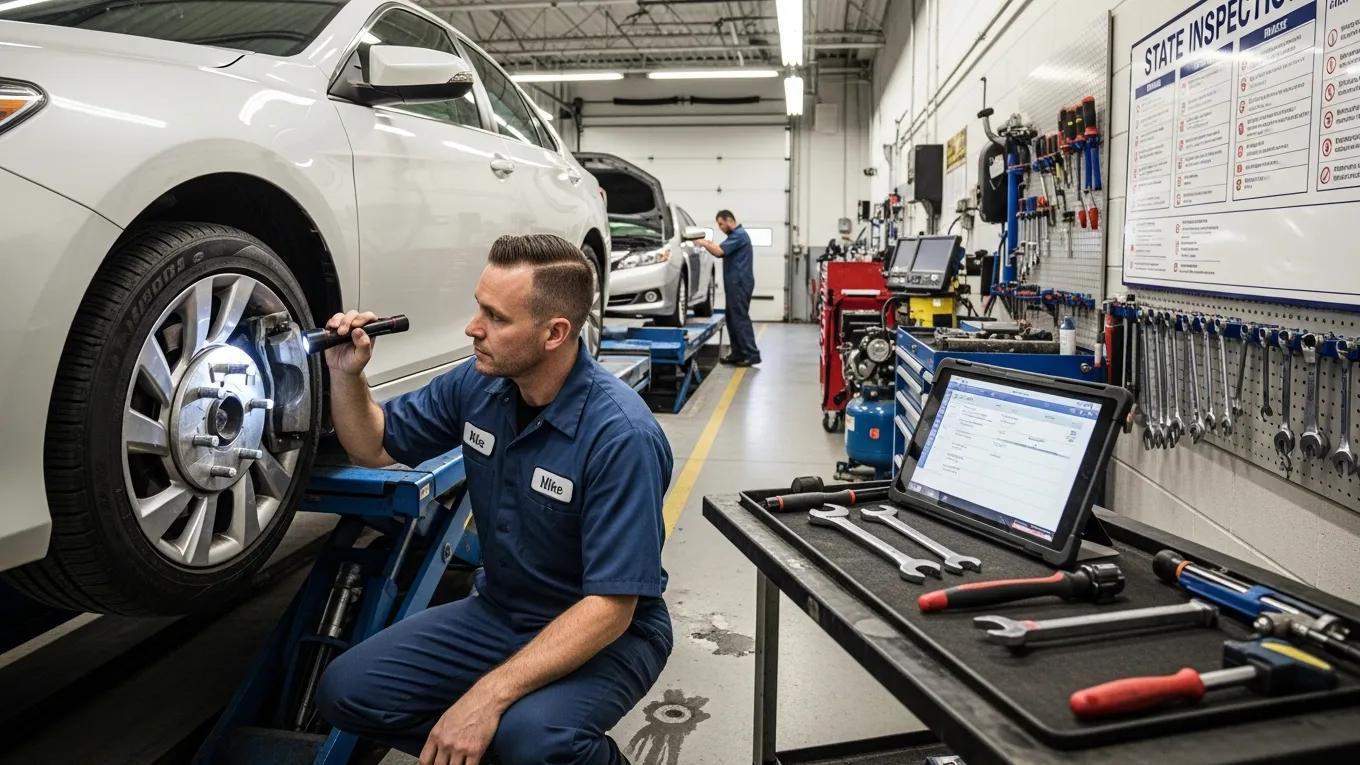
The safety inspection examines the vehicle’s main systems to confirm safe operation. Key checks include brakes, exterior lights, tire condition, and related safety items.
- Brakes: Assessment of brake functionality and effectiveness.
- Lights: Inspection of all exterior lights for proper operation.
- Tires: Evaluation of tire condition and tread depth.
Knowing what is inspected allows you to focus your preparation on the most critical items.
How Does the Emissions Testing Requirement Affect Your Vehicle?
Emissions testing checks the exhaust and related systems to confirm your vehicle meets environmental limits. Vehicles that exceed those limits will fail and require repairs to the emissions system before re-inspection.
How Often Is a PA Vehicle Inspection Required and What Are the Validity Periods?
Pennsylvania requires vehicle inspections once a year. A passing inspection results in a sticker that is generally valid for one year from the inspection date. Track your inspection date so you stay compliant.
What Is the Inspection Sticker Validity and Renewal Process?
The inspection sticker proves your vehicle passed the annual check. If you fail, you must fix the listed issues and pass a re-inspection. After a successful inspection, you receive a new sticker showing the next due date.
What Are the Consequences of Missing or Failing a PA State Inspection?
Failing to have a valid inspection can lead to fines and citations. Driving without a current inspection sticker may result in legal penalties. Prioritise inspections to avoid these consequences.
What Steps Are Involved in the PA State Inspection Process at George Automotive?
George Automotive follows a clear process to ensure a thorough inspection.
- Initial Assessment: The technician will conduct a preliminary assessment of the vehicle.
- Detailed Inspection: Each component of the vehicle will be inspected according to state regulations.
- Report Generation: After the inspection, a report will be generated detailing the findings.
This structured approach ensures inspectors evaluate all required items and document findings clearly.
How to Schedule Your PA State Inspection Appointment Locally?
To schedule at George Automotive, call (570) 275-2610. Have your vehicle make, model, and year available to speed up the booking process.
What Happens If Your Vehicle Fails the Inspection?
If your vehicle does not pass, you will receive a report that lists required repairs. Address the issues, then return for a re-inspection to obtain a valid sticker.
What Are Common Reasons for Inspection Failure and How Can You Prepare?
Typical reasons for failure include lighting faults, poor tire condition, and visible fluid leaks. Check these items before your appointment to reduce the likelihood of failing.
- Faulty Lights: Ensure all lights are functioning before the inspection.
- Tire Issues: Check tire tread and pressure.
- Fluid Leaks: Address any visible leaks before the inspection.
Preparing these systems in advance increases your chance of passing on the first try.
Which Vehicle Issues Most Often Cause Inspection Failures?
Frequent causes of failure include worn brakes, emissions exceedances, and poor tire condition. Identifying and repairing these issues ahead of time helps you pass the inspection more easily.
How Does George Automotive Support Inspection Repairs and Maintenance?
George Automotive provides repair services for items that cause inspection failures. Their experienced technicians diagnose problems, perform necessary repairs, and prepare the vehicle for re-inspection so you can return to the road.
Where Can You Get Reliable PA State Inspection Services in Danville and Bloomsburg?
George Automotive is a local option for PA state inspections in the Danville area. They focus on thorough inspections and reliable service for vehicle owners in the community.
Why Choose George Automotive for Your PA State Inspection Needs?
Choose George Automotive for expert service from qualified technicians who pay attention to detail. Their focus on clear communication and reliable work helps customers complete inspections with confidence.
What Do Customers Say About Their PA Inspection Experience?
Customers consistently note the shop’s professionalism and efficient inspections. Many value the clear explanations of any required repairs and the practical guidance provided.
Frequently Asked Questions
What Should I Do If I Lose My Inspection Sticker?
If you lose your inspection sticker, contact the station that last inspected your vehicle. They can issue a replacement if you can show proof of the previous inspection. Replace the sticker promptly, as driving without it can lead to fines. Keep a record of inspection details to make replacement easier.
Can I Get My Vehicle Inspected If It Has Modifications?
You can have a modified vehicle inspected, but the modifications must meet Pennsylvania safety and emissions rules. Some changes may need additional checks or paperwork. Call the inspection station ahead of time to confirm whether your specific modifications affect the inspection outcome.
How Long Does a PA State Inspection Typically Take?
A standard inspection generally takes 30 to 60 minutes, depending on vehicle condition and the station’s workload. If repairs are needed, the total time may increase. Booking during quieter hours can reduce wait times.
What Are the Emissions Testing Requirements for Different Vehicle Types?
Emissions rules vary by vehicle type. Gasoline, diesel, and hybrid vehicles have different standards, and older models may face different requirements than newer ones. Check with your inspection station to confirm the specific emissions criteria for your vehicle.
Can I Appeal an Inspection Failure?
Yes. First discuss the failure report with the inspection station to understand the reasons. If you disagree, you may request a re-inspection at another certified station. Be aware that you may need to address identified issues before the appeal process proceeds.
What Should I Do If I Can’t Afford Repairs After Failing Inspection?
If repairs are unaffordable, speak with the inspection station about possible payment plans or financing options. You can also explore local charities or community programs that assist low-income vehicle owners. Addressing issues promptly helps avoid legal penalties for driving without a valid inspection.
Are There Any Exemptions to the PA State Inspection Requirement?
Some vehicles may be exempt from annual inspection. Examples include vehicles less than a year old and certain antique registrations. Some farm vehicles and specific trailers may also be exempt. Consult PennDOT for the latest exemption criteria.
What Is Included in a PA State Inspection?
A PA state inspection evaluates safety systems, emissions components, and overall roadworthiness. Inspectors typically review brakes, lights, tires, and the exhaust system as part of the assessment.
How Much Does a PA State Inspection Cost?
Inspection costs vary by location and provider. Contact local inspection stations for current pricing information.
Conclusion
Knowing the PA state inspection requirements helps you keep your vehicle safe and compliant. Follow the checklist, prepare basic systems in advance, and address issues promptly if you fail. Regular inspections protect you from legal problems and costly repairs. To schedule your inspection, contact George Automotive and book an appointment to ensure your vehicle is inspected and road-ready.